

The I-75 power line shutdown refers to episodes when Interstate 75 — one of the most vital north–south highways in the United States — was closed due to downed power lines across the roadway. These incidents, often caused by severe weather and infrastructure failures, have far-reaching impacts on traffic, safety, emergency response efforts, and local communities. In this article, we explore what happened during the shutdowns, why they occurred, how authorities responded, and the broader implications for drivers and regional transportation planning.
Understanding the I-75 Power Line Shutdown
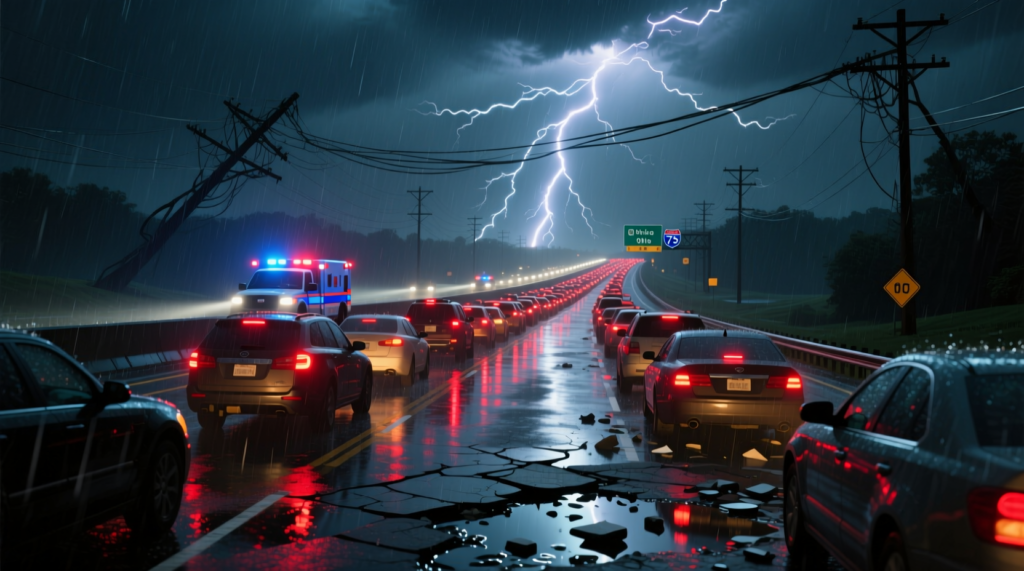
The I-75 power line shutdown typically occurs when high-voltage electrical lines fall onto the interstate, making travel unsafe and forcing authorities to close lanes or the entire highway. One such notable shutdown happened in Vandalia, Ohio, where both northbound and southbound lanes of I-75 were closed after severe thunderstorms knocked down power lines across the highway, creating a dangerous situation for motorists and requiring significant cleanup before reopening the road.
Incidents like these reflect the vulnerability of critical highway infrastructure to extreme weather events and other unexpected hazards. Power lines that cross highways are essential for delivering electricity to surrounding communities, but when extreme wind, lightning, or structural failures compromise them, the resulting hazard can paralyze a major transportation artery.
Causes Behind the Shutdown
1. Severe Weather
A primary cause of the I-75 power line shutdown is severe weather, especially thunderstorms with strong winds and lightning. In Vandalia, Ohio, downed power lines were the result of intense storms, underscoring how nature can disrupt both energy systems and transportation simultaneously.
Storms can uproot trees, snap utility poles, or damage infrastructure components, sending live electrical wires onto roadways — a situation that poses risks of electrocution, vehicle fires, and secondary accidents.
2. Infrastructure Vulnerability
Power lines that cross highways are supported by poles and towers that, while built to withstand typical conditions, may be susceptible to extraordinary loads or impacts. When these supports fail — whether due to weather or an unintended collision — the lines can fall on busy roadways, prompting an interstate shutdown.
Though specific details around every shutdown are unique, recurrent issues highlight the need to reassess how crucial infrastructure is maintained and reinforced, especially in areas prone to extreme weather.
Immediate Impacts of the Shutdown
1. Traffic Paralysis and Delays
When the I-75 power line shutdown occurred, all lanes of the interstate in the affected section had to be closed for safety reasons, leading to significant traffic delays. Both directions of travel were halted, and drivers had to wait until crews cleared debris and ensured that live wires were no longer a hazard to motorists.
Such closures can quickly turn a normally predictable drive into a frustrating experience. In extreme cases, motorists are left stranded for hours, unable to proceed or safely exit the roadway.
2. Emergency Response Challenges
Closing a major interstate due to downed power lines complicates emergency responses. Ambulances, fire trucks, and police vehicles may need to take alternate routes, slowing response times. Even utility crews face challenges accessing and repairing power infrastructure when highways are closed.
3. Public Safety Concerns
Downed power lines pose immediate threats. Live wires can cause electric shock, ignite fires, or damage vehicles. The shutdown of a major highway due to such hazards — as seen in the I-75 incident — highlights how intertwined energy and transportation safety truly are.
Response by Authorities
During the I-75 power line shutdown, authorities were swift in their response to secure the affected area:
- Ohio State Highway Patrol coordinated traffic closures and ensured public safety in the shutdown zone.
- Utility crews worked to de-energize damaged lines and remove hazards before roadways could be reopened.
- Transportation departments provided updates and rerouting information to motorists to manage congestion.
The collaboration between highway patrols, power companies, and transportation authorities is essential during such emergencies to balance the need for safety, urgency for repairs, and traffic management.
Broader Impacts on Communities
1. Economic Costs
While specific economic data on the I-75 power line shutdown incident is not always quantified publicly, it is well understood that significant highway closures carry economic costs. These include lost work hours for commuters, delayed deliveries for freight and logistics companies, and fuel and time costs for diverted motorists.
Interstate highways like I-75 are critical for commerce. Extended closures can ripple through supply chains, impacting businesses far beyond the immediate shutdown zone.
2. Community Disruptions
Local communities near the shutdown often feel the impact acutely. Commuters may struggle with unusually long alternative routes, and local roads — not designed for high traffic volumes — can become congested.
When major transportation routes are blocked unexpectedly, community events, school schedules, and daily routines can all be disrupted.
Lessons Learned and Future Outlook
1. Infrastructure Resilience
The I-75 incidents highlight the need for resilient infrastructure that can withstand severe weather and other stresses. Investments in hardened utility systems — such as burying power lines where feasible or strengthening support structures — could reduce the likelihood of such shutdowns.
2. Better Early Warning Systems
Advanced monitoring and early warning systems could help authorities anticipate when weather conditions may threaten critical infrastructure. If drivers had timely information about potential hazards like fallen power lines ahead, they could adjust travel plans proactively.
3. Interagency Coordination
The I-75 power line shutdown also underscores the importance of seamless coordination between power utilities, highway authorities, emergency services, and traffic management teams. Quick and coordinated action helps mitigate both safety risks and traffic disruptions.
Driving Safely During Shutdowns
For motorists traveling on major routes like I-75, understanding what to do in case of a shutdown is crucial:
- Follow official direction: Law enforcement and transportation officials issue closures and detours for safety. Follow their instructions.
- Avoid downed lines: Never approach or touch fallen power lines. Even lines that appear inactive may be live.
- Stay informed: Use traffic apps or listen to local news for shutdown updates and alternate routes.
- Be patient: Significant closures can take time to clear, and waiting could be safer than attempting unsafe detours.
Conclusion
The I-75 power line shutdown serves as a stark reminder of how fragile critical infrastructure can be when faced with extreme weather and accidents. Power lines falling onto a highway not only create immediate safety hazards but also disrupt travel, emergency services, and local economies.
From the Ohio example where both directions of I-75 were closed due to downed high-voltage lines to other similar events across the country, the importance of resilient infrastructure, coordinated emergency response, and public awareness cannot be overstated. While such shutdowns are relatively rare, their impacts are profound — affecting hundreds or even thousands of drivers and communities alike.
Understanding these events and their repercussions helps us appreciate the complexities of managing modern transportation networks and the importance of investing in infrastructure that can withstand the unexpected. By learning from these incidents, authorities and drivers alike can be better prepared for the challenges that lie ahead.
