

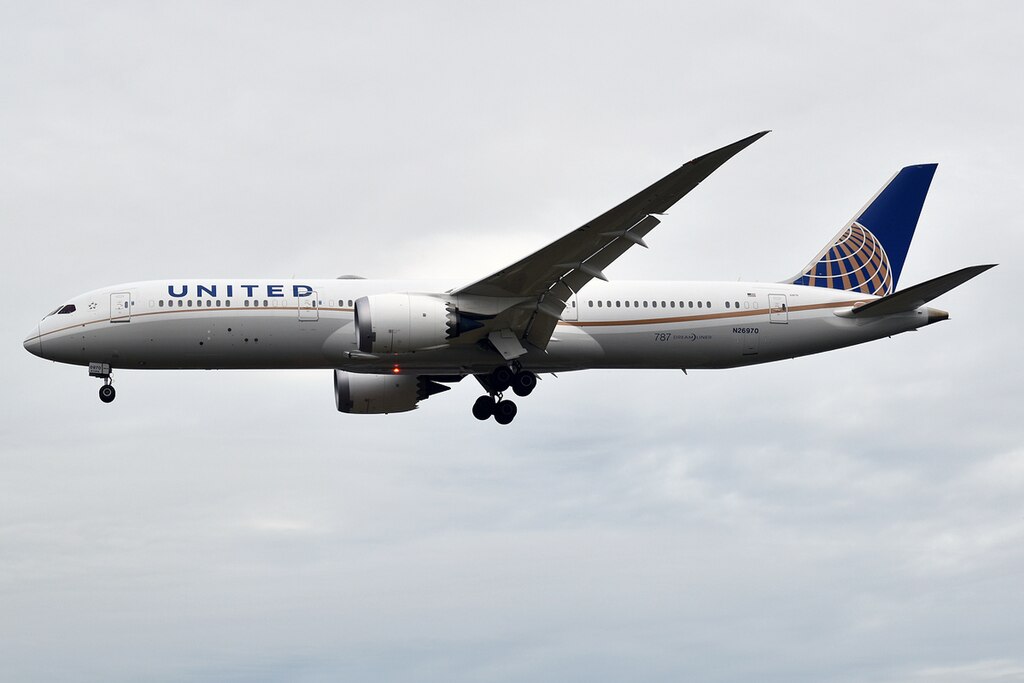
On July 7, 2025, United Airlines flight UA82 — a scheduled long-haul service between Newark Liberty International Airport (EWR) in the United States and Indira Gandhi International Airport (DEL) in New Delhi, India — became the center of an in-flight emergency that forced an immediate return to its departure airport. What could have become a dangerous situation was handled with professionalism and caution, demonstrating how rigorous safety protocols and crew training continue to be vital in modern aviation.
In this article, we examine what prompted the emergency, how the crew responded, what passengers experienced, and the broader implications for airline safety — all under the spotlight of the “United Airlines flight UA82 emergency.”
What Went Wrong: The Cooling System Fault
Just around 45 minutes after departure, while the Boeing 787-9 Dreamliner had climbed to cruising altitude, the crew of UA82 detected a critical fault: a malfunction in the aircraft’s electronics-cooling system.
The electronics-cooling system isn’t related to cabin comfort or air-conditioning — rather, it’s responsible for cooling the avionics bay: the heart of the plane’s navigation, communication, autopilot, and flight-control electronics. Without it, overheating could jeopardize the aircraft’s ability to steer, communicate, or safely manage the flight.
Because this was the transatlantic start of a long over-water journey to Delhi, the risk of continuing with a faulty avionics cooling system was judged unacceptable. The crew took no chances.
Immediate Response: Declaration of Emergency and Safe Return
Once the fault was identified:
- The crew immediately declared an in-flight emergency (squawking transponder code 7700, the universal aviation signal for “we need priority handling”).
- Air traffic control granted priority clearance, and the aircraft began a controlled return to Newark.
- The Dreamliner descended safely and landed back at Newark — roughly two hours after departure — without any reported injuries or visible mechanical damage.
Passengers and crew disembarked normally; there was no panic, no smoke or fire, and no dramatic scenes. Just a textbook execution of safety procedures.
Passenger Experience & Aftermath
For the 362 passengers and 10 crew aboard the flight, what began as a routine overnight trip to New Delhi ended abruptly with an unexpected return to Newark. But according to early post-flight reports:
- The cabin crew remained calm and made clear announcements to reassure everyone.
- The descent and landing were smooth; there was no sign of chaos or visible distress.
- On the ground, the airline arranged support: rebooking assistance, hotel rooms or accommodations if needed, and meal vouchers for affected travelers.
For many, the interruption was frustrating — long-haul flights are often booked months in advance, flights coordinated for onward connections, and travel plans carefully scheduled. The sudden disruption meant re-adjustments, delays, and uncertainty.
Still, given the potential severity of avionics overheating during a long over-ocean flight, passengers and airline alike were lucky that the issue appeared early and was handled decisively.
Why the Avionics Cooling System Matters
To appreciate the significance of the malfunction, it helps to understand what avionics cooling does:
- Modern aircraft — especially wide-body, long-haul jets like the Boeing 787-9 — rely heavily on computerized systems for navigation, autopilot, communication, flight-control, environmental regulation, and monitoring.
- These systems generate heat. Without adequate cooling, overheating can cause malfunctions or failures in critical systems like communication or autopilot.
- Over the ocean, far from airports, pilots have limited margin for error; redundancy helps, but a core-system failure remains a grave risk.
Thus, an electronics-cooling fault is not a minor glitch. It is a serious anomaly — enough for trained flight crews to treat it as an emergency rather than a “wait-and-see” issue.
In short: avionics cooling protects the “digital brain” of the aircraft. If that goes awry mid-flight, especially over remote or oceanic airspace, continuing becomes a calculated gamble. The crew on UA82 made the safest decision.
Broader Implications: Safety Culture, Maintenance, and Passenger Confidence
The UA82 emergency highlights a few key lessons and reminders for the aviation industry and travelers alike:
The Strength of Safety Protocols and Crew Training
The handling of UA82 was textbook correct: immediate recognition of a fault, prompt declaration of emergency, priority clearance, safe return and landing — all without injury or panic.
It underscores that modern commercial aviation isn’t just about advanced aircraft; it also depends on disciplined, well-trained crews and robust safety protocols.
Maintenance Realities and Preventive Measures
Even with modern aircraft and regular maintenance schedules, complex systems like avionics cooling can still malfunction.
This incident will likely prompt deeper inspections, potentially a review of similar systems across fleet, especially for long-haul aircraft. That can help prevent future incidents and restore (or reinforce) confidence in aircraft reliability.
What It Means for Travellers
For frequent flyers or travelers booking long-haul journeys, this incident is a reminder that:
- Delays, cancellations, or emergency returns can happen even on large carriers with modern fleets.
- It’s wise to build in buffer time when traveling internationally — especially when onward connections, visas, or tight schedules are involved.
- Transparency and communication from airlines matter a lot — and in this case, the calm, clear response likely reduced fear and confusion.
Media Coverage and Public Reaction
The event was widely covered in aviation-news outlets soon after it happened. Reports emphasized:
- The aircraft declared an emergency shortly after takeoff.
- The fault was specified as a failure in the aircraft’s electronics cooling system — key to avionics safety.
- All passengers and crew landed safely with no injuries, and the plane returned to Newark for inspection.
On social media platforms and dedicated flight-tracking forums, passengers and observers expressed a mixture of concern, relief, and curiosity.
One user on a flight-tracking forum recounted:
“The aircraft reported a cooling system ops fault … The system that keeps all the computers cool has failed. Without cooling, those computers will overheat … Instead of interrupting your Candy Crush streak … the pilots may experience degradation or failure of the aircraft’s communications, navigation, or flight controls systems.”
Another wrote that their parents were on UA82 and got rebooked on another flight via Munich two days later.
These testimonies reinforce the point that, while frightening in theory, the real-world outcome was handled admirably.
What Happens Next: Investigation, Maintenance & Prevention
Following the incident, the aircraft involved (registered as N23983) was taken out of service for a thorough inspection and maintenance.
Federal Aviation Administration (FAA) regulations — and similar international oversight protocols — require that any in-flight emergency triggered by system fault must be reviewed, causes identified, and corrective actions implemented before the aircraft returns to service.
Given the severity of avionics-cooling issues, it’s likely that maintenance schedules for similar aircraft will be revisited. Structural audits or system upgrades may be recommended to prevent recurrence. For passengers and airlines alike, this underscores the ongoing need for vigilance, even in well-maintained fleets.
Conclusion
The “United Airlines flight UA82 emergency” serves as a compelling example of why aviation safety — far from being automatic — depends on a complex interplay of advanced technology, human vigilance, and strict protocols. A failure in something as seemingly mundane as a cooling system for avionics could have jeopardized the flight if not handled correctly.
But thanks to quick detection, professional crew action, and clear-headed decision-making, what could have been a serious crisis ended with everyone safe. For passengers, the disruption was inconvenient; for the aviation community, it is a reminder that safety is not a luxury, but a necessity. And for all who fly, it’s a testament that — even at 33,000 feet over the ocean — calm professionalism and preparedness can make all the difference. In the end, the UA82 emergency highlights that while no flight is immune to technical risks, the lessons from this incident strengthen trust in aviation’s safety systems — and help protect future passengers in flights yet to come.
